Client
Race Mango
Android app for athletes: from the race calendar to Map Heist.
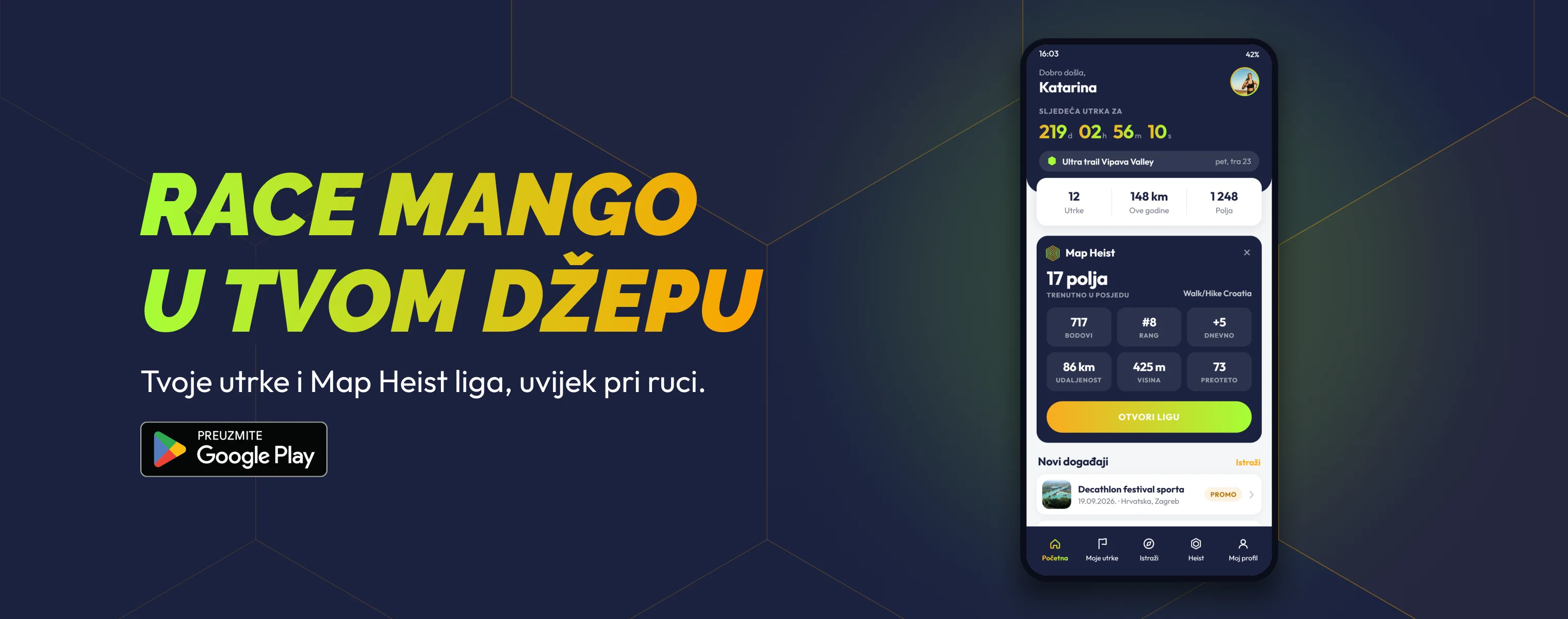
After a few years on the web, the mobile version arrived in 2026, with the platform adapted for a smaller screen and for use on the move.
The app covers the athlete side of the platform: the race calendar for running, cycling and hiking, entries, results, and Map Heist, a gamified addition that turns every training session into capturing territory on a real map, so the platform stays interesting between races too.
The app isn’t always used the same way. Some people open it once every three months to find a race, some every day for Map Heist, and some only in the week before the start, to check the time and the meeting point. The challenge was to build an app that works for all of them, however often they open it: someone who comes rarely has to get going without learning anything, and someone who comes daily shouldn’t have to pass through introductory screens every time to reach what they came for.
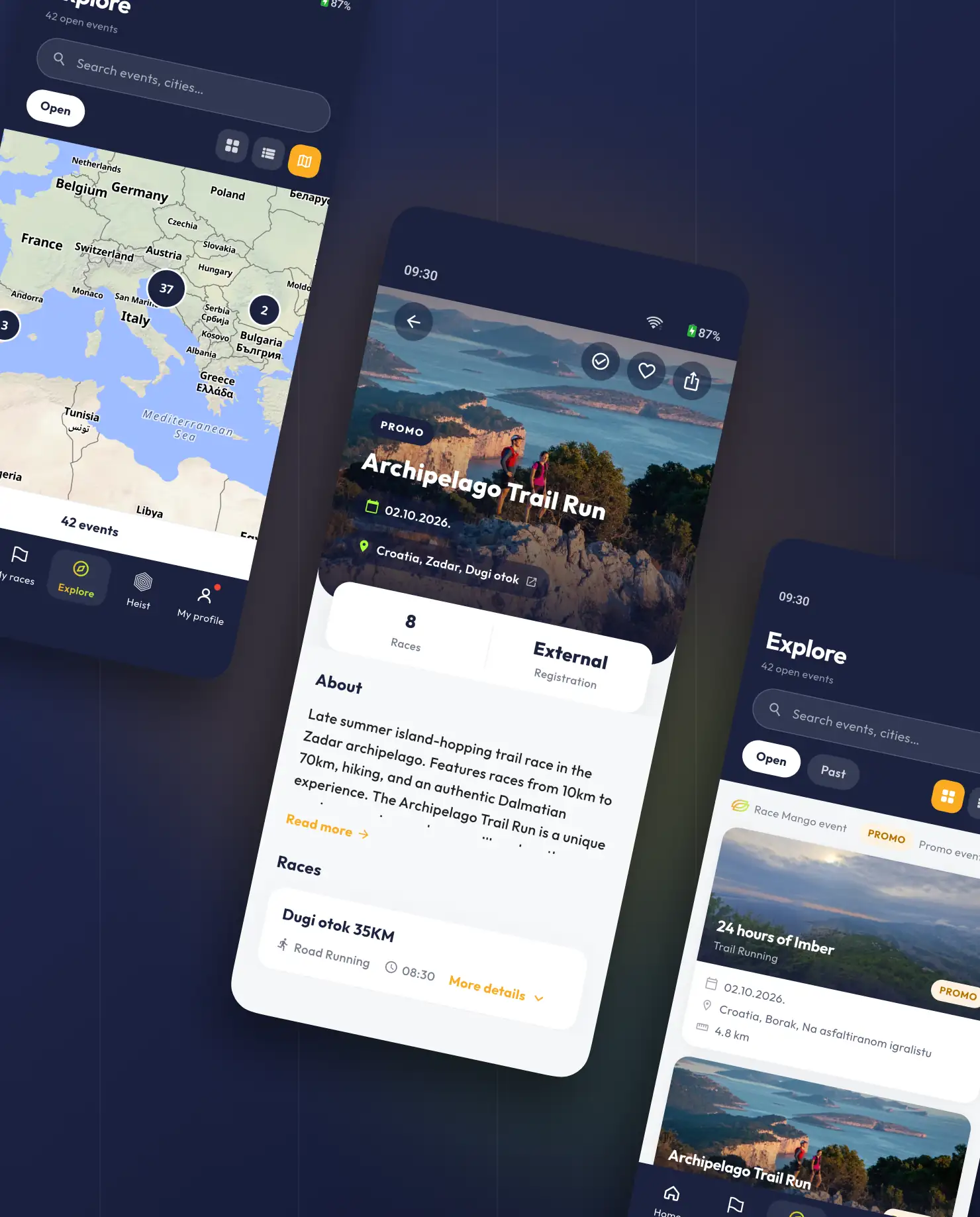
The content comes from a platform that grew on the web for years, so it had to be rearranged for the phone rather than simply shrunk. What looks clear on a wide screen quickly becomes crowded on mobile, and every decision about what goes on the first screen is also a decision about what moves into the background.
Map Heist needed the most room, bringing maps, fields, leagues, seasons, statistics, badges and jerseys, a density of data the race calendar doesn’t have. It had to be given the space it needs while the app still reads as a race platform.
Visually the app stayed recognisably Race Mango, with two changes: a darker interface than the web and new, more modern typography suited to a small screen.
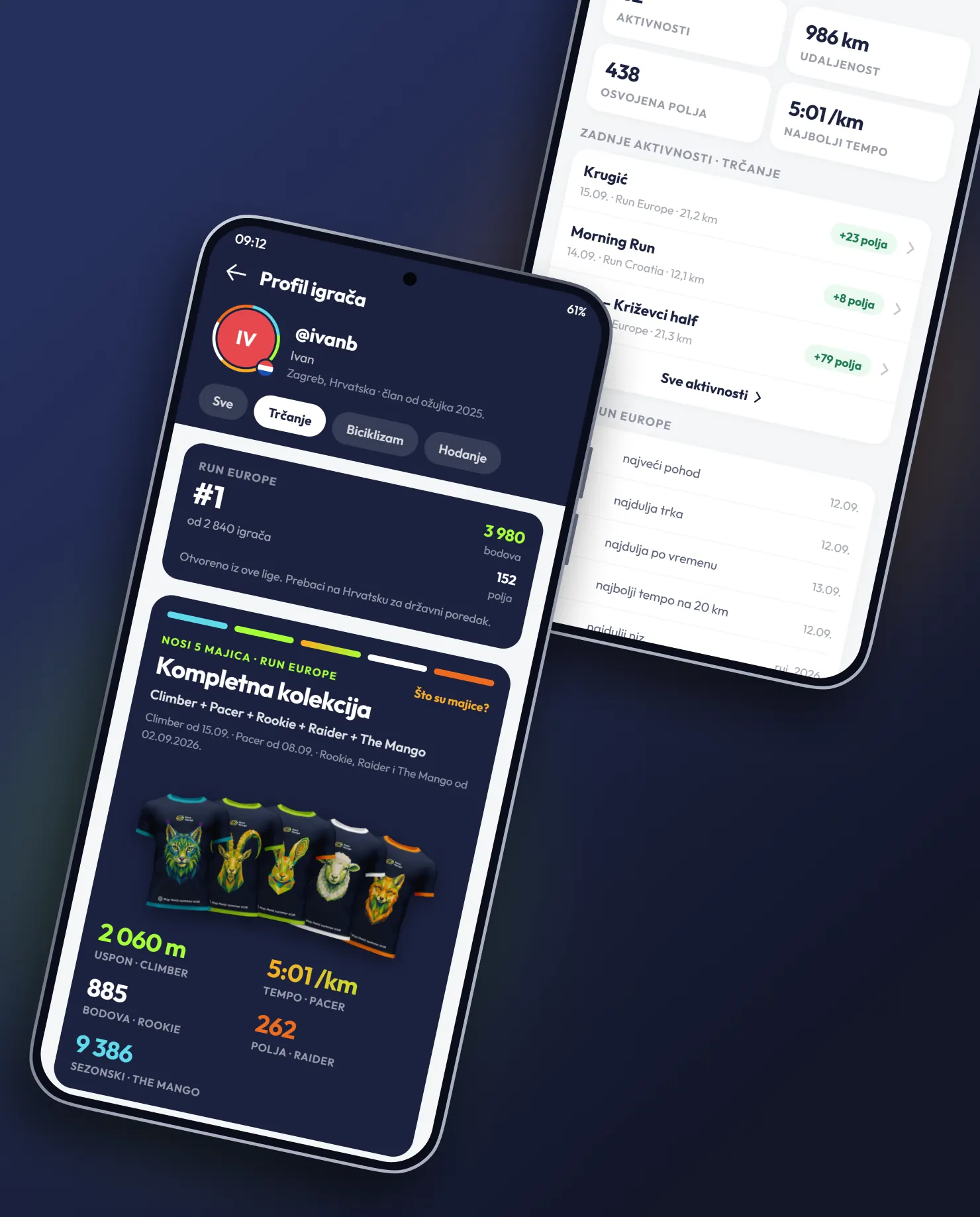
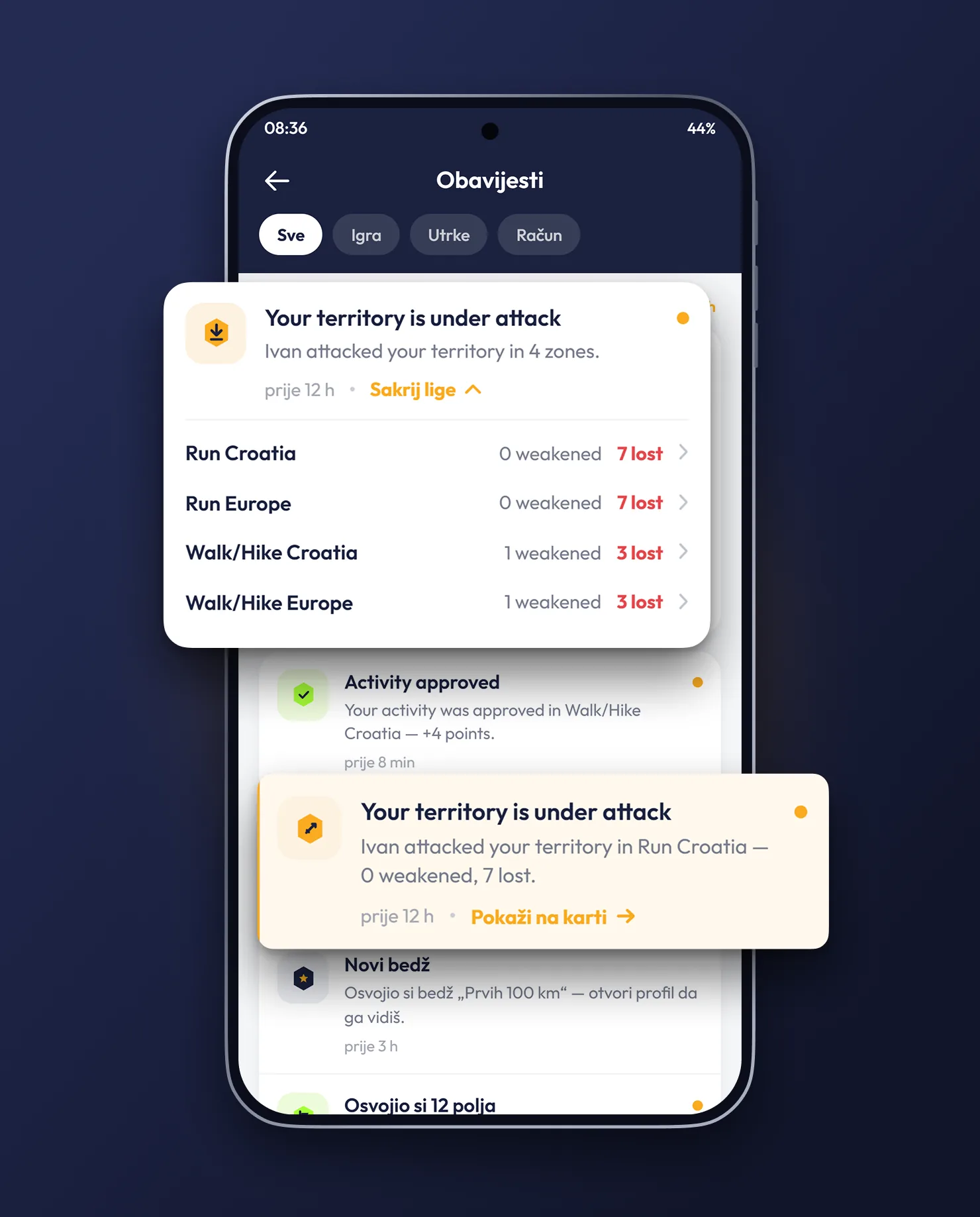
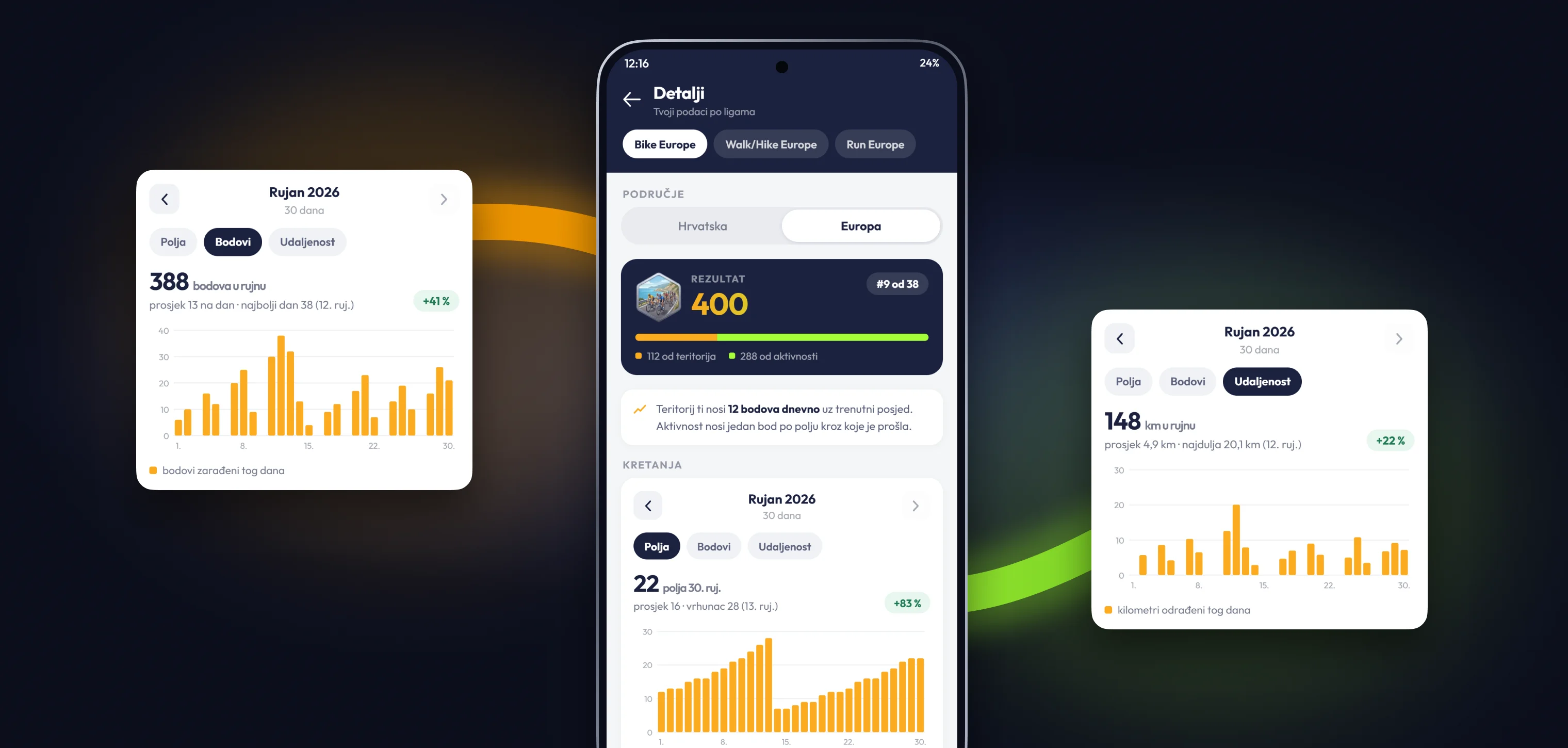
Map Heist is a GPS territory game on a real map of Europe. You run, cycle, walk or hike, and that’s how you take ground. An empty field is yours by passing through it; someone else’s has to be taken from them. In the app it was worked out more thoroughly, with a better user experience: a clearer view of the data, a more logical layout and a clearer path from activity to captured field.
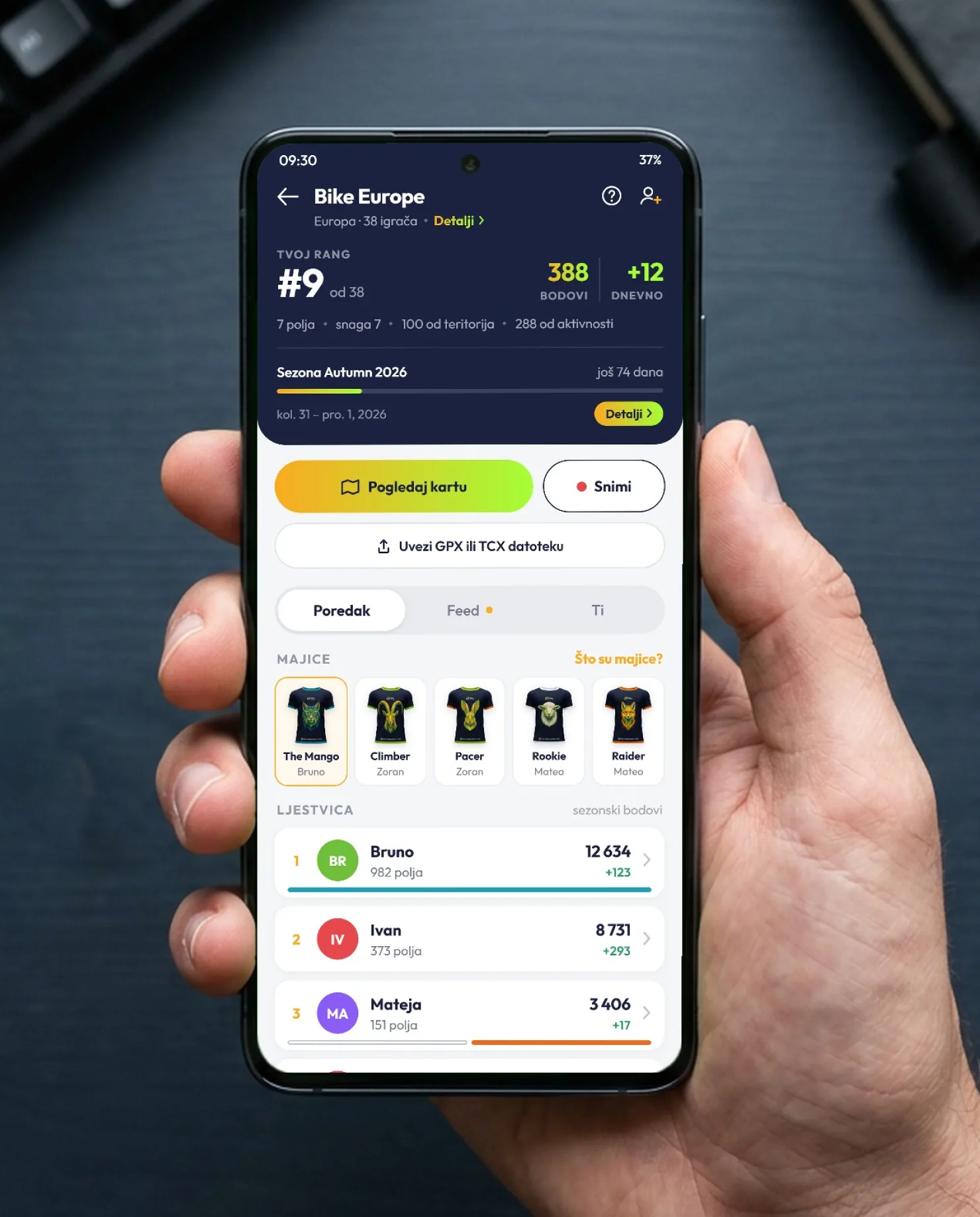
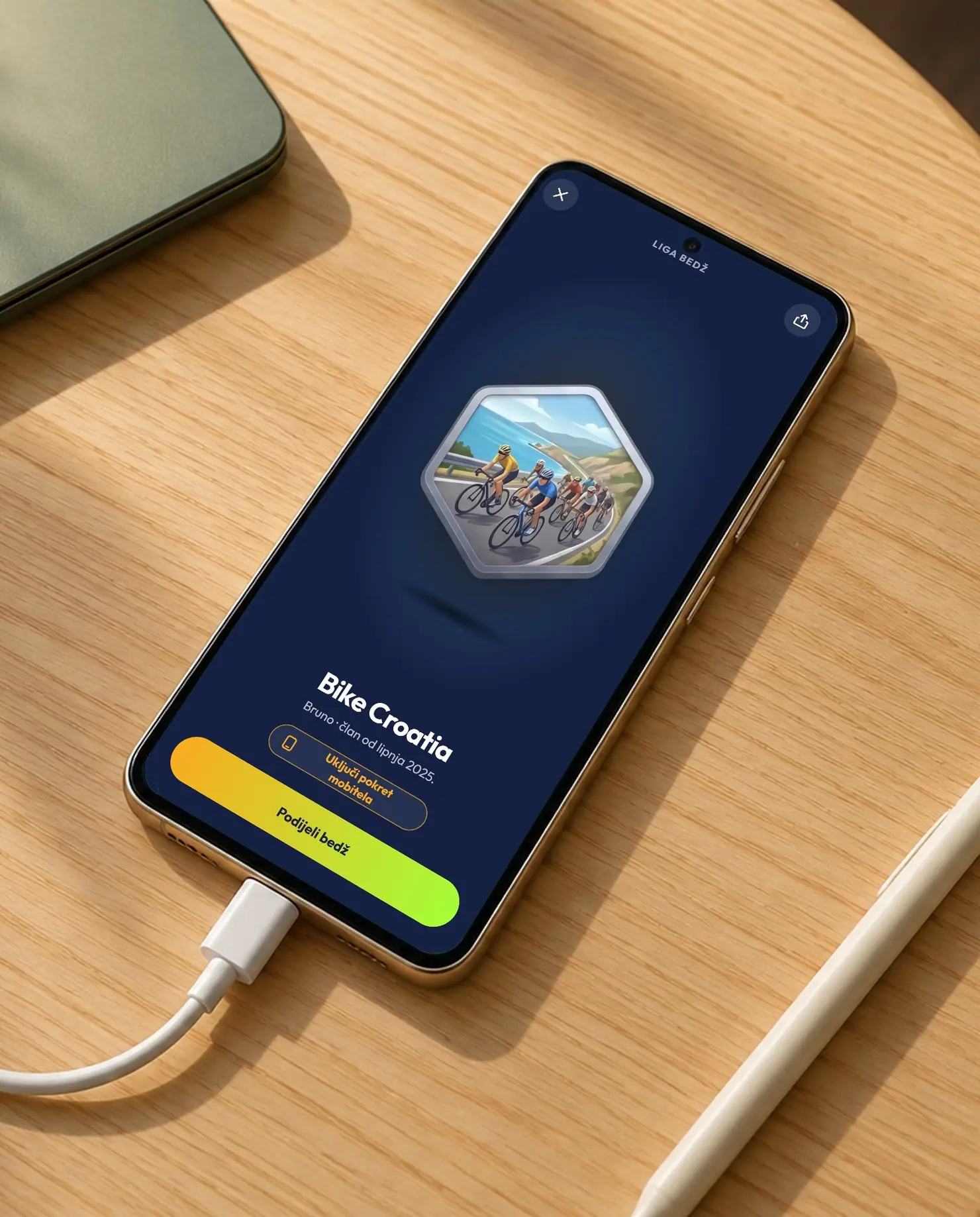
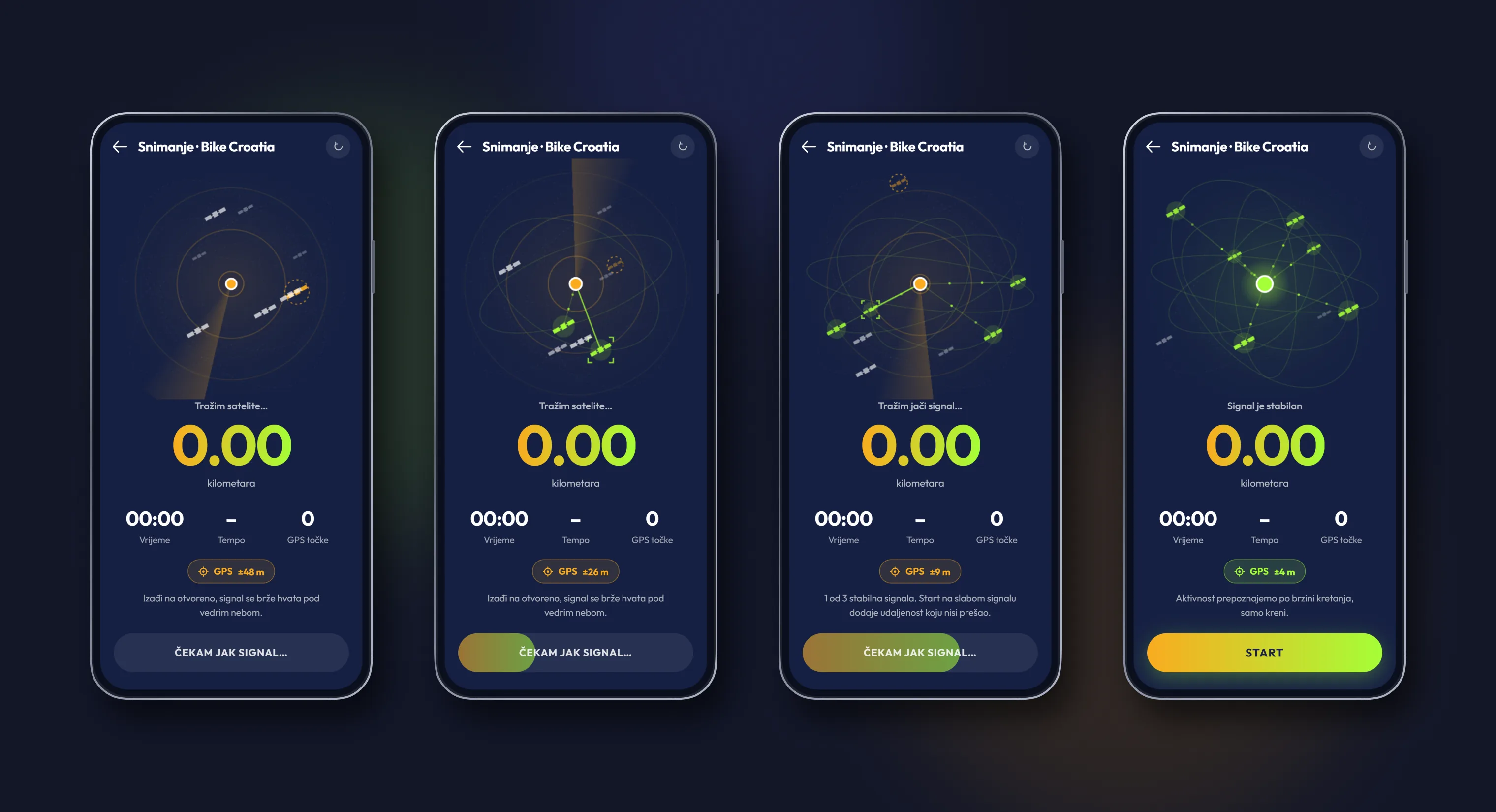
One step we couldn’t solve the way we wanted, because Garmin isn’t accepting new applications for API access. Instead of a single button to connect an account, we had to find other ways for an activity to reach the app. We came up with three: uploading a GPX, TCX or FIT file from any sports app, connecting through our own Connect IQ app on the watch, or recording the activity directly inside Race Mango. Users have to take a few extra steps, and the interest is still there.
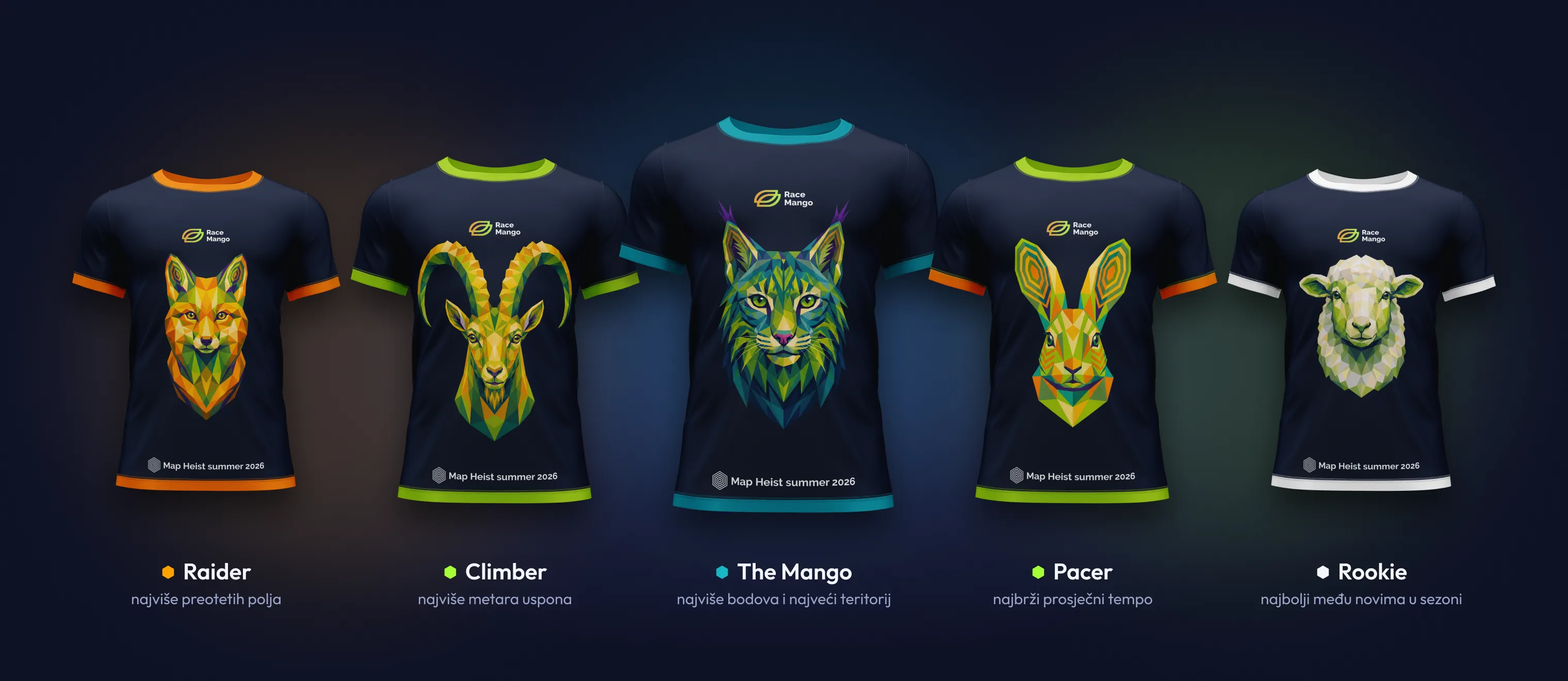
Map Heist’s features developed alongside the app, and the jerseys came out of conversations about new ideas. The model is cycling: just as the Tour doesn’t only have a yellow jersey but also one for the best climber and the best young rider, here there are five jerseys instead of a single leaderboard. The reasoning is simple. On one leaderboard, counting only points, the person who trains most always wins, and everyone else drops off somewhere mid-season, once it’s clear they won’t catch up. Five different criteria mean that someone who will never collect the most points still has something to win.
Mango is the lynx, for the most points and the largest territory. Climber is the ibex, for the most metres of climbing. Pacer is the hare, for the fastest average pace. Raider is the fox, for taking the most fields from other players. Rookie is the lamb, for the best among those who joined during the season.
The app is available on Google Play ↗, development continues, and the platform itself is covered in a separate case study.